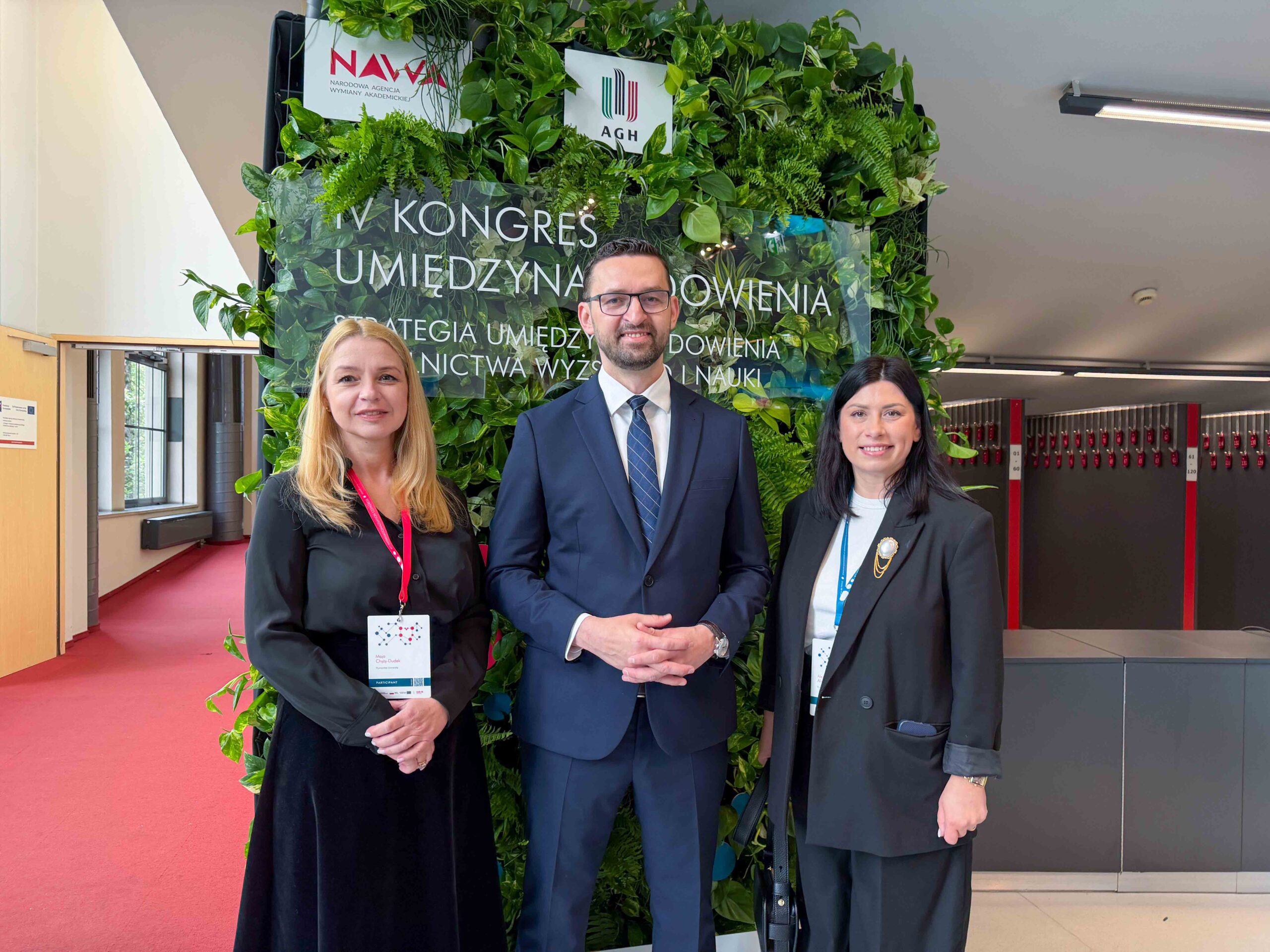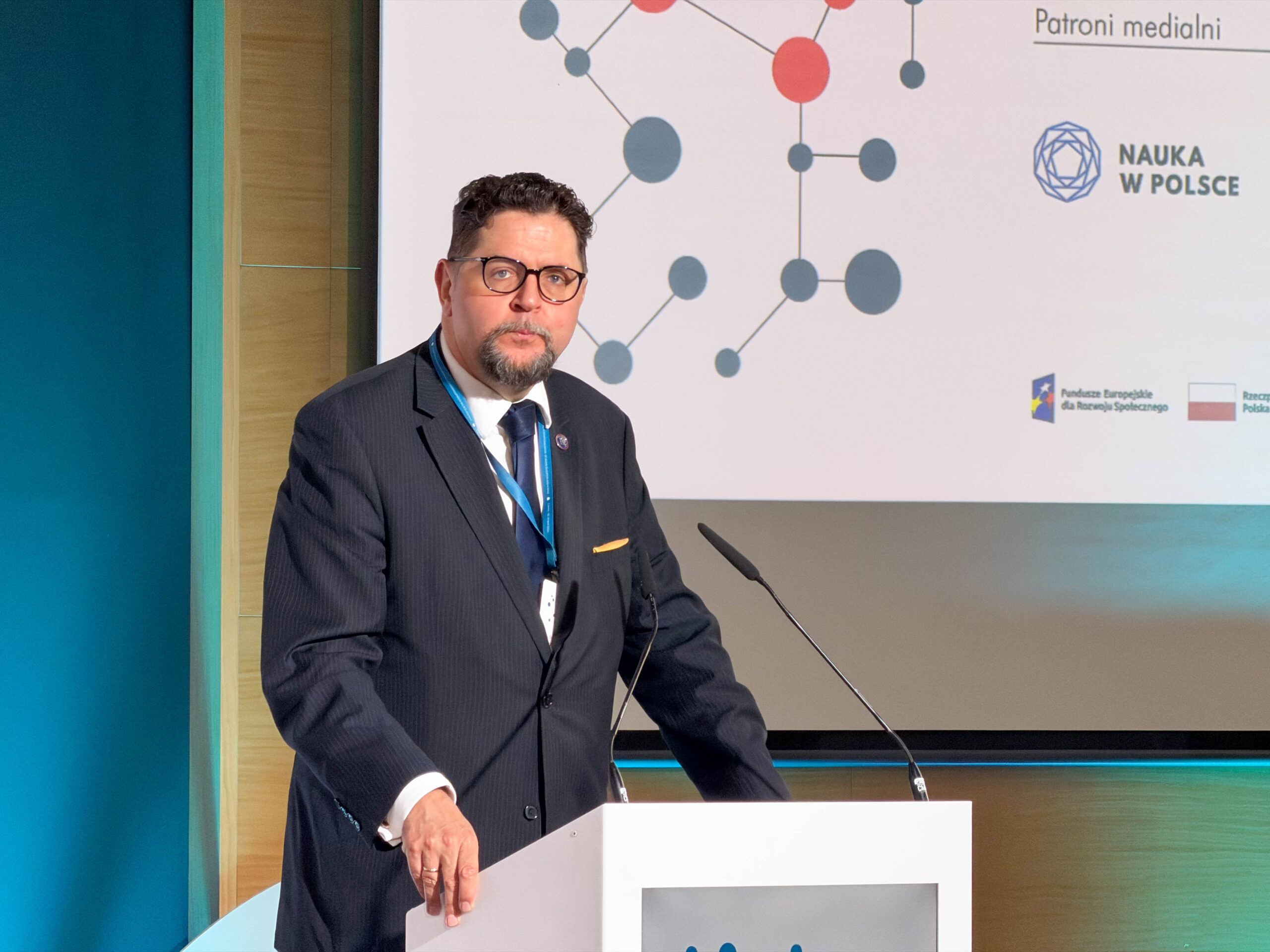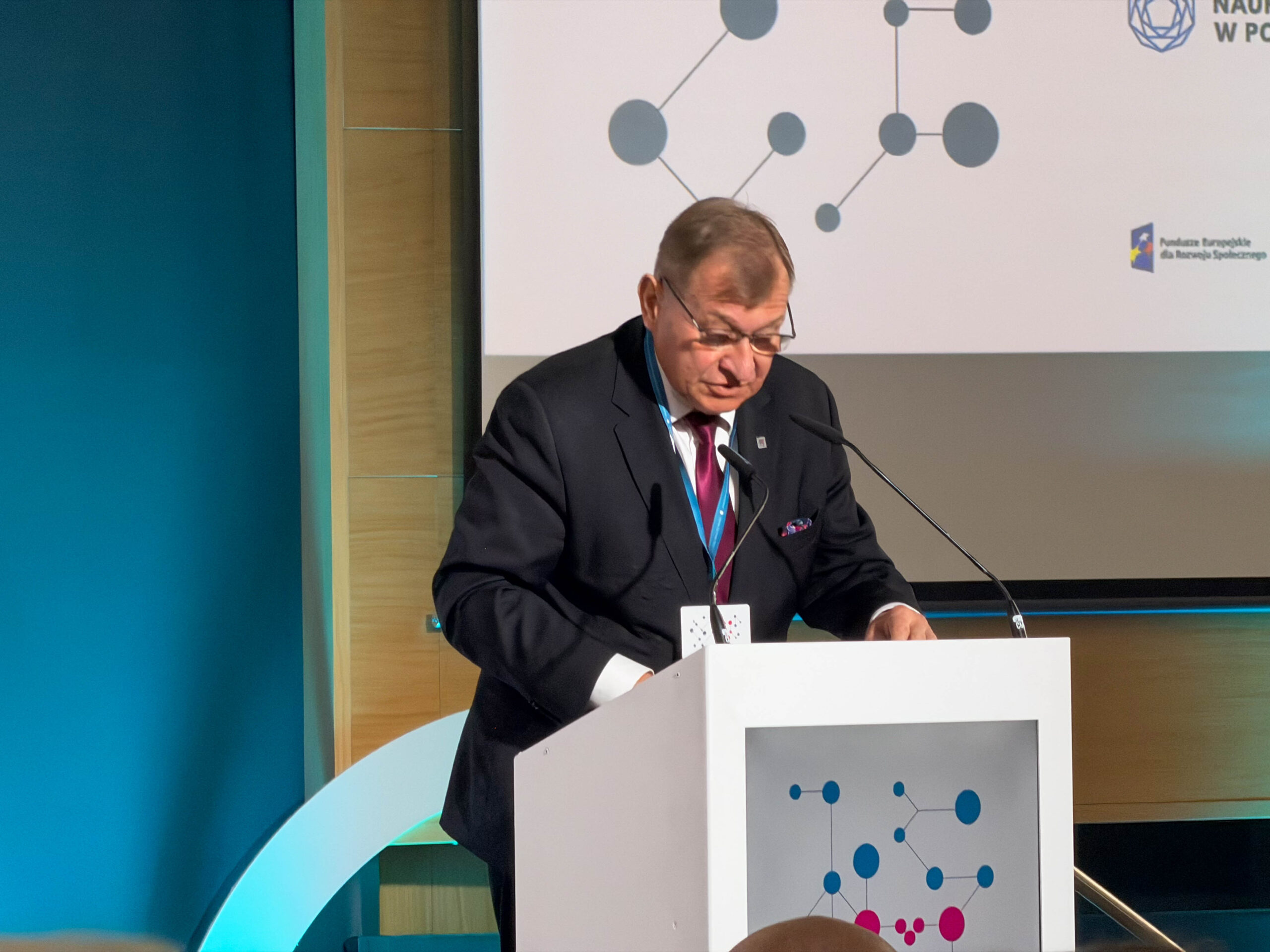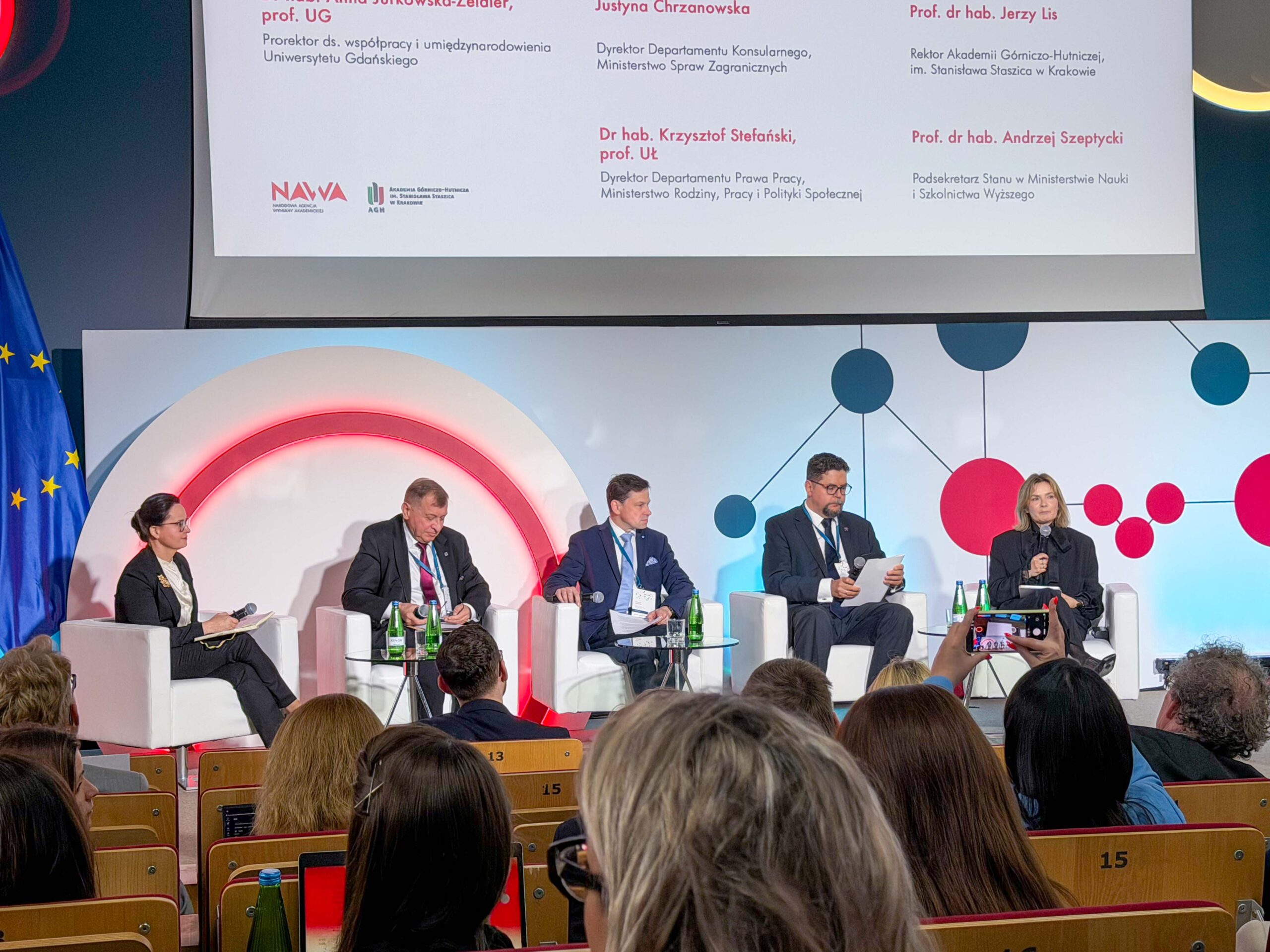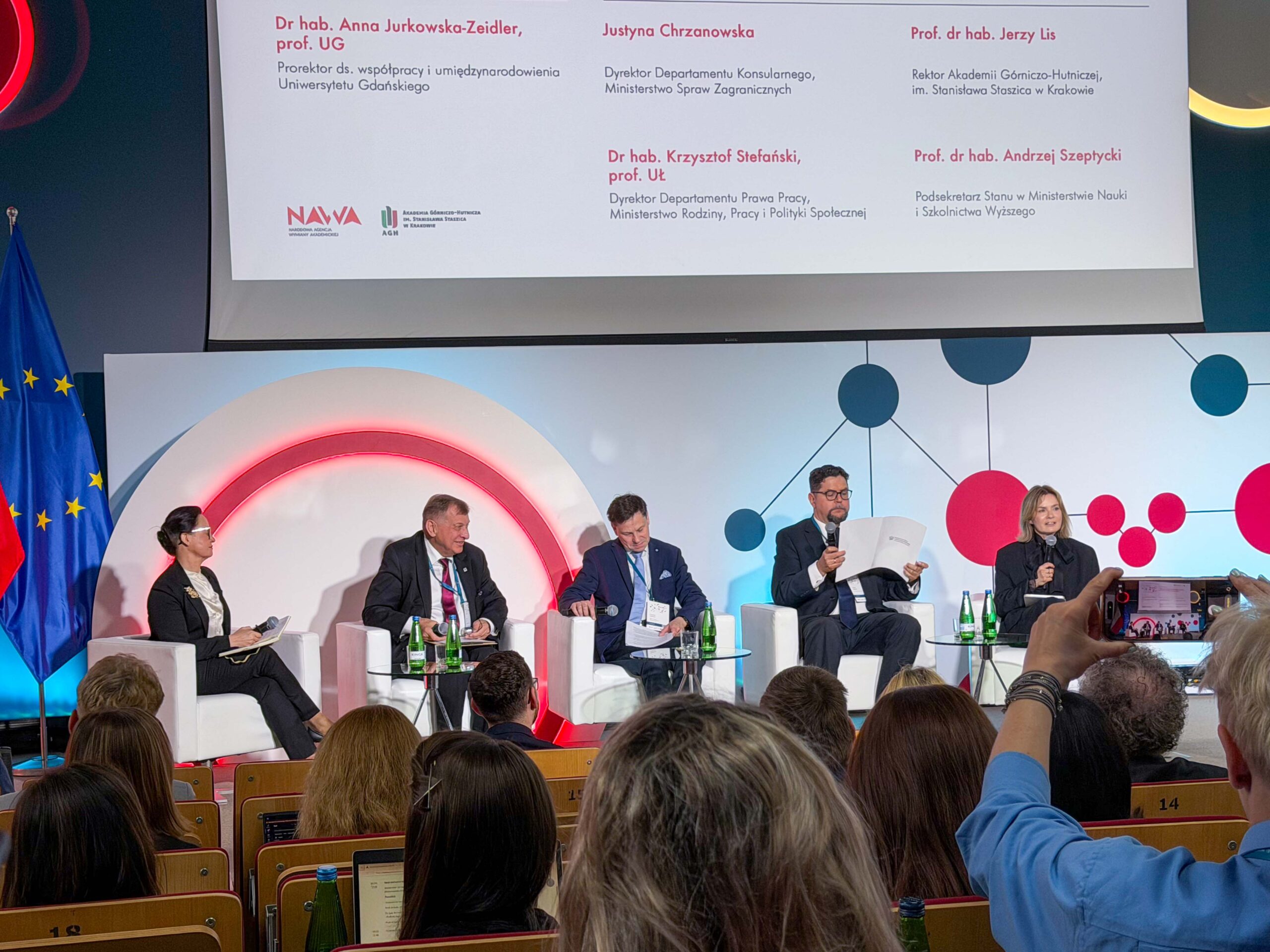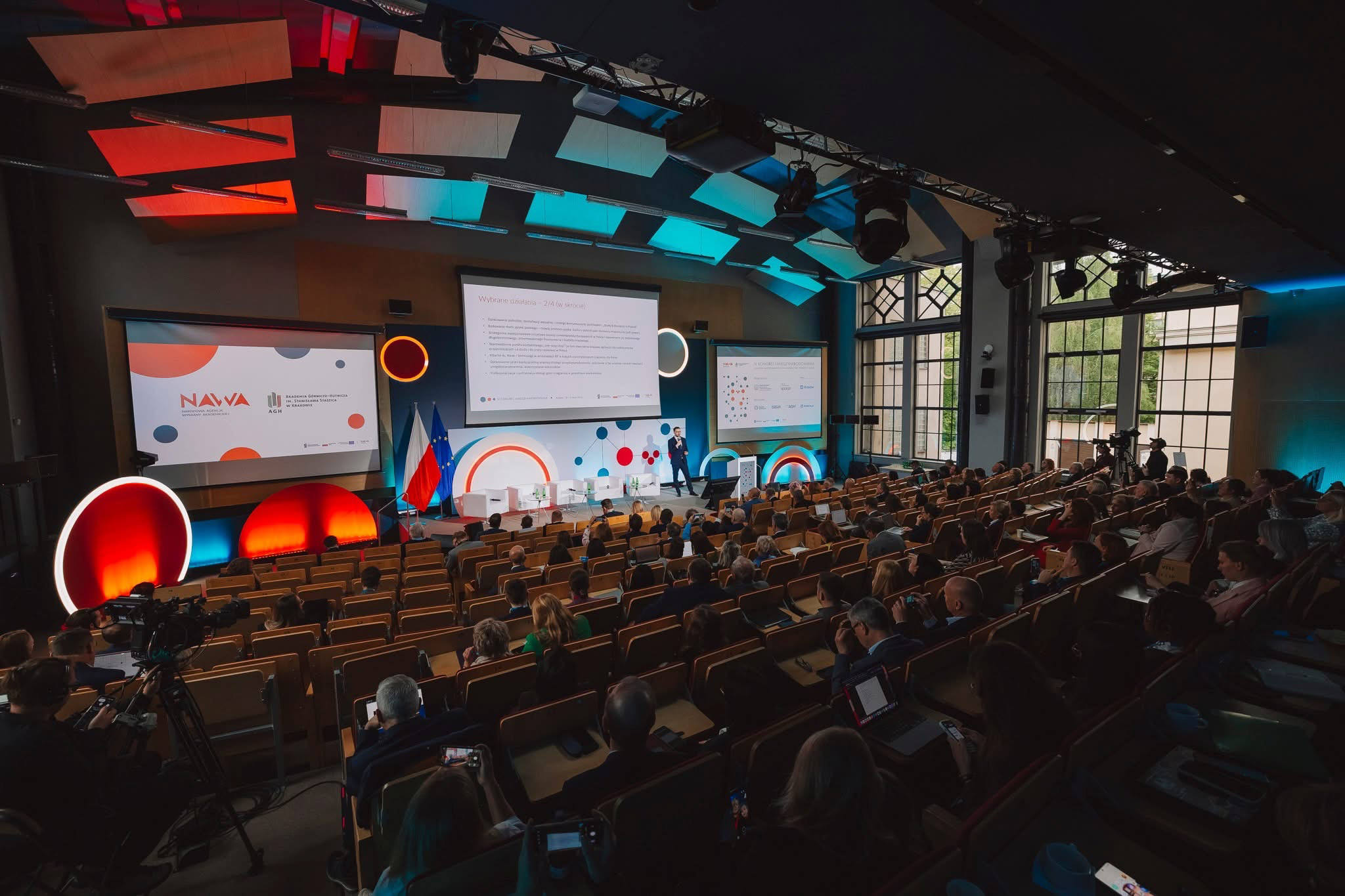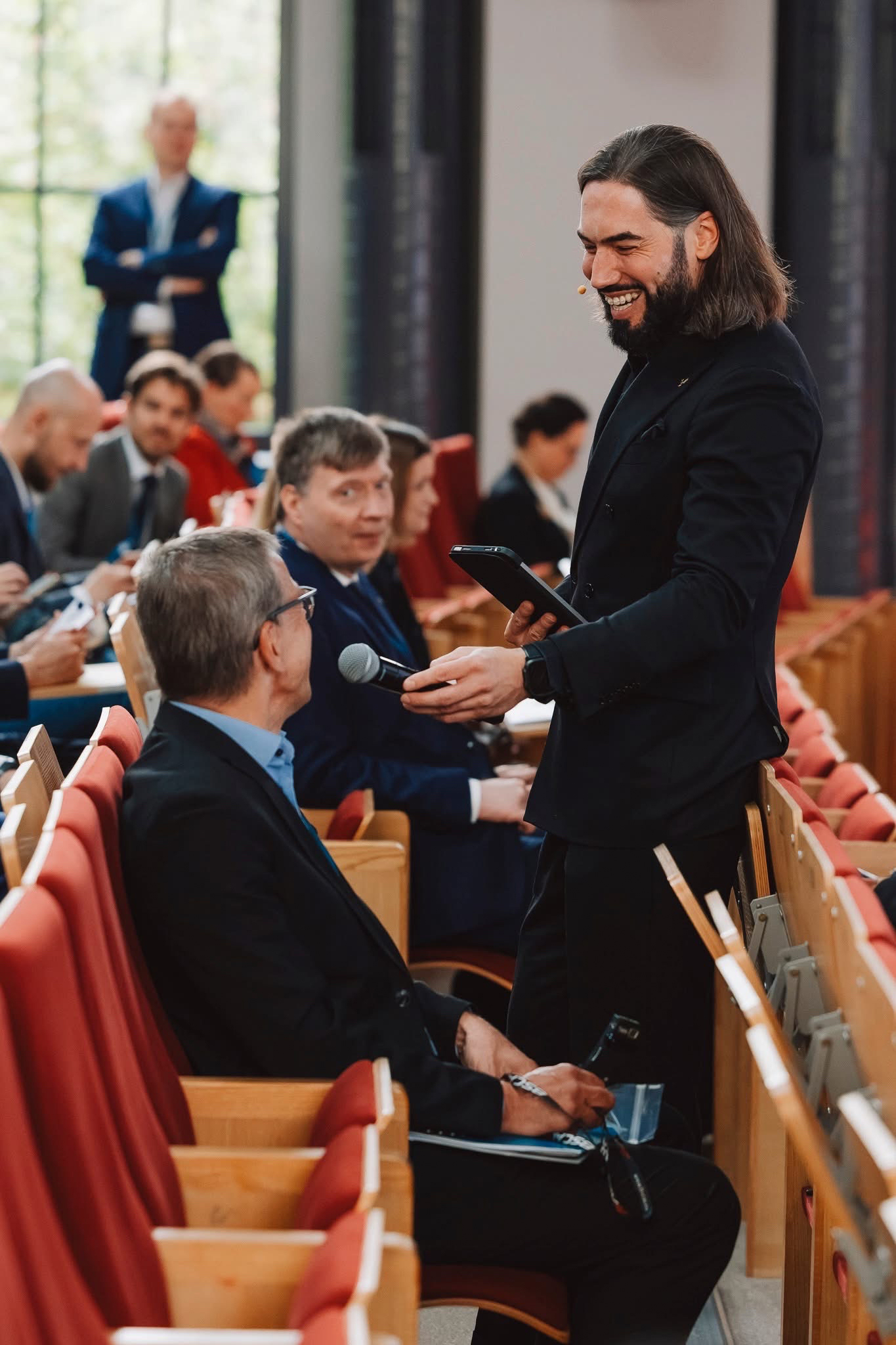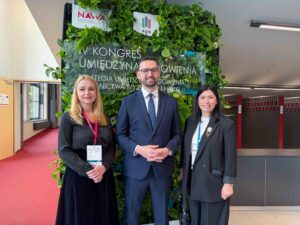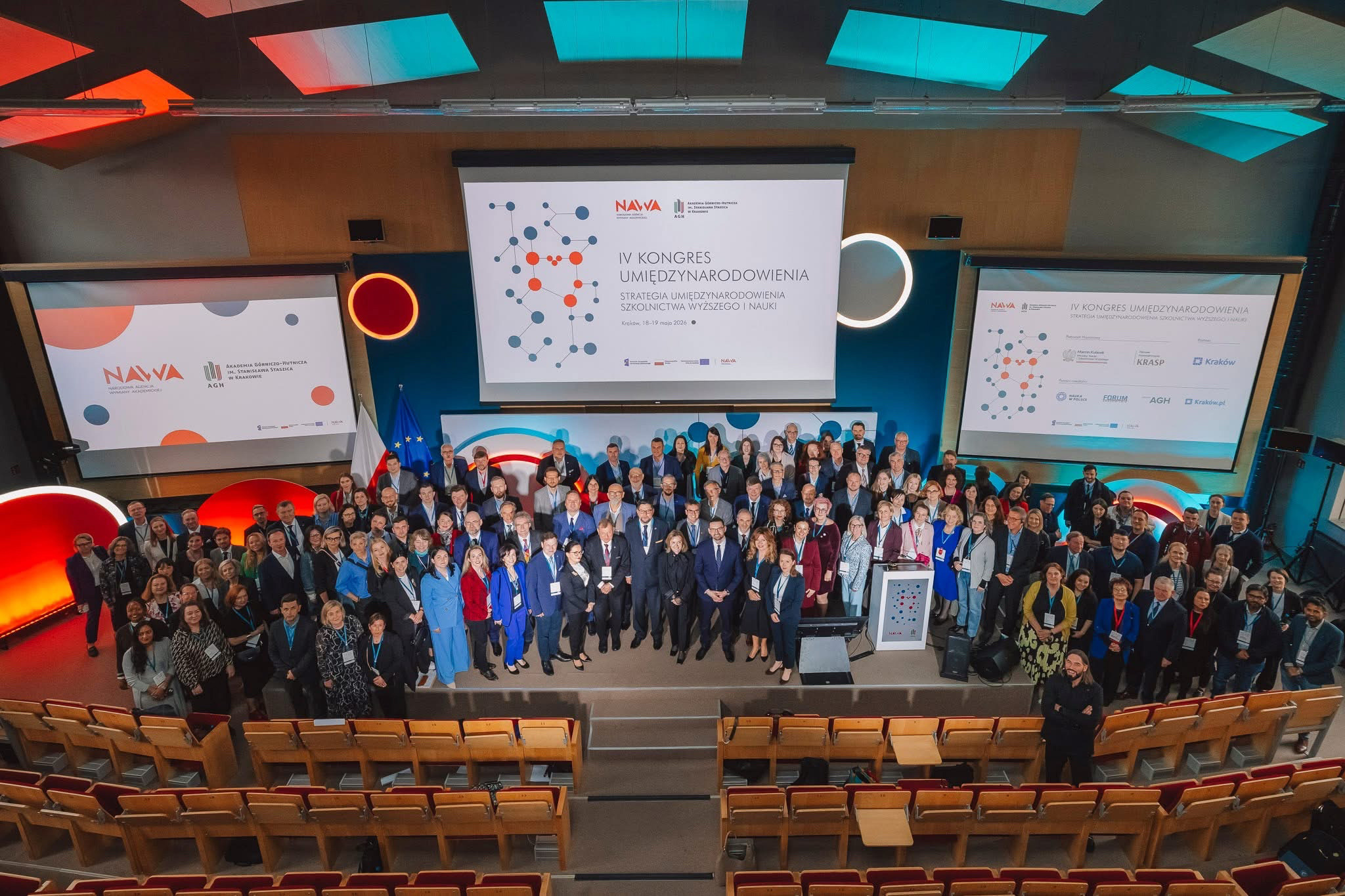
The Fourth Congress on Internationalization, one of the most important events of the higher education sector this year, was held in Krakow. The meeting, organized by the National Agency for Academic Exchange (NAWA) in cooperation with the AGH University of Science and Technology, brought together experts, rectors and representatives of international cooperation offices from all over the country. Humanitas University’s representation was not to be missed in this elite group.
Our university was represented by the Office of International Cooperation team during the two-day intensive session:
- Maja Chyży-Dudek – Associate Dean for Internationalization,
- Alesia Aliakhnovich – Senior Specialist in International Cooperation,
- Artur Kostiv – Senior specialist in international cooperation.
Strategy 2035 and “brain circulation”
The main highlight of the congress was the debate on the new Strategy for Internationalization of Polish Higher Education and Science until 2035. During the keynote speeches, the assumptions of this document, which is based on 4 main goals and as many as 32 strategic actions, were discussed in detail.
NAWA experts paid particular attention to the need for better coordination of the entire academic ecosystem and the transition from simply attracting foreign students to the phenomenon of so-called brain circulation (talent circulation). For Humanitas University, this is a key signpost in the further design of its educational offer, which is not only to educate, but also to realistically build international scientific and business cooperation networks.
Security, geopolitics and university resilience
The second day of the congress brought highly topical panel discussions on new geopolitics and academic freedom and security. In the face of today’s global challenges, a lot of attention was paid to the cyber resilience of universities and the effective fight against disinformation. Speakers emphasized the importance of careful and transparent selection of foreign partners and protection of intellectual property.
Participation in these panels allowed our team to share good practices with other leading internship centers in Poland and update our knowledge of internal security procedures.
Integration with the local community
Internationalization, however, is not just about statistics and international agreements, but first and foremost about people. An important part of the session was a discussion of the impact of the presence of foreign students on the local economy and urban communities. Among other things, the administrative barriers faced by foreigners and the role of university support points (Welcome Points) were discussed. It was emphasized that the success of internationalization depends on how effectively we are able to integrate foreign students into city life and connect their potential with the local labor market.
New prospects for Humanitas University
Participation in the 4th Internationalization Congress is another step for our university in consistently building a strong, recognizable brand. The conclusions of the Krakow panels are a valuable tool for further dynamic development of our English- and Ukrainian-speaking programs.
We are returning to Sosnowiec with a package of ready-made solutions and new inspirations. We are setting the standards for a modern, safe and foreign student-friendly academic space that effectively combines European educational quality with global trends.