

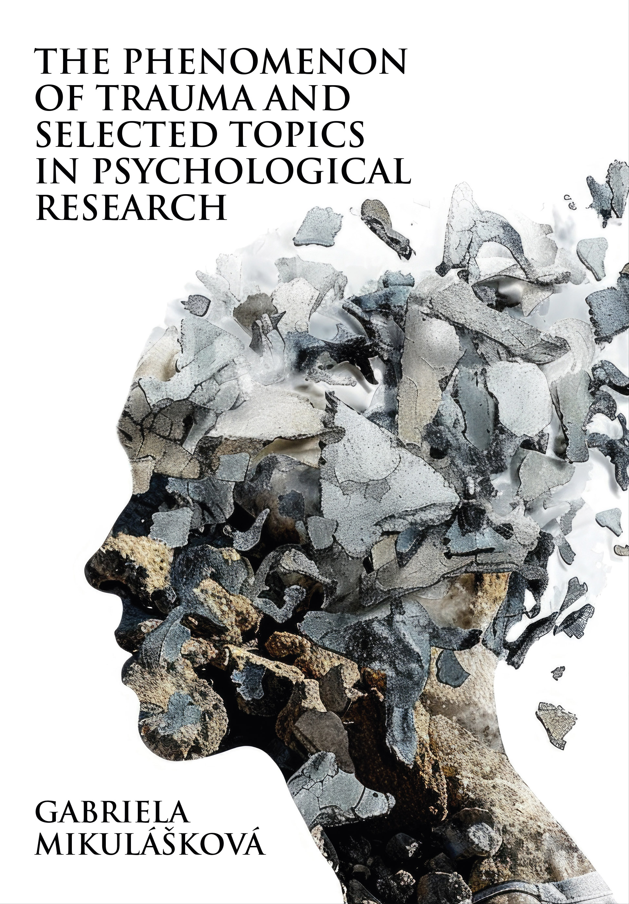
The phenomenon of trauma and selected topics in psychological research
Автор
Gabriela Mikulášková
Видавництво
Oficyna Wydawnicza „Humanitas”
ISBN
978-83-68024-67-8
Subject
Psychologia, Trauma
Genre
Монографія
Category
Psychologia
Зміст
Abbreviations
Introduction
-
The conceptualization of trauma
1.1. The concept of trauma
1.2. The typology of trauma
1.3. Factors of experiencing trauma
1.4. Chapter summary -
Childhood trauma and mechanisms of psychopathology development risk
2.1. The consequences of childhood trauma
2.2. Psychological consequences of trauma and reconstruction of beliefs about
the world
2.3. Chapter summary -
Transgenerational transmission of trauma
3.1. Approaching transgenerational transmission of trauma
3.2. Chapter summary -
Conveying trauma in quantitative psychological research
4.1. Overview of trauma measurement instruments
4.2. Summary on conveying trauma in quantitative psychological research
4.3. The occurrence of PTSD symptoms as part of post-pandemic mental health
research (selected results of quantitative research)
4.4. Summary on the occurrence of PTSD symptoms as part of post-pandemic
mental health research -
Conveying trauma in qualitative research
5.1. An overview of issues
5.2. Child traumatization in the research on a secondarily victimized child
(selected results of qualitative trauma research)
5.2.1. The concept of a secondarily victimized child
5.2.2. Secondarily victimized child in women’s accounts
5.2.2.1. Child’s responses to exposure to violence. Child as a witness
to violent behaviour towards mother
5.2.2.2. The impact of the child’s presence on a man’s aggression towards
the mother
5.2.2.3. Children’s reactions to exposure to violence
5.2.2.4. Differences in children’s reactions (by gender and age)
5.2.2.5. Processing a child’s negative experiences in the family
5.2.2.6. The impact of exposure to violence on a child’s personality
5.2.2.7. A traumatized child’s academic performance
5.2.2.8. Social relationships of traumatized children – the child’s
relationship with peers
5.2.2.9. The child’s relationship with father and mother
5.2.3. Summary on child traumatization in the research on a secondarily
victimized child
5.3. Transgenerational transmission of trauma
5.3.1. Selected results of qualitative research on transgenerational
transmission of trauma
5.3.2. Summary on transgenerational transmission of trauma -
Comparison of quantitative and qualitative research into trauma
Conclusion
References
List of tables

Administracja i Prawo, Historia i politologia, Administracja publiczna i samorząd
Pakiet 2+1 – Adam Lityński
Детальніше
Bezpieczeństwo i studia strategiczne, Administracja publiczna i samorząd